
Why Off-Season Breaks Offer Quieter Countryside Experiences
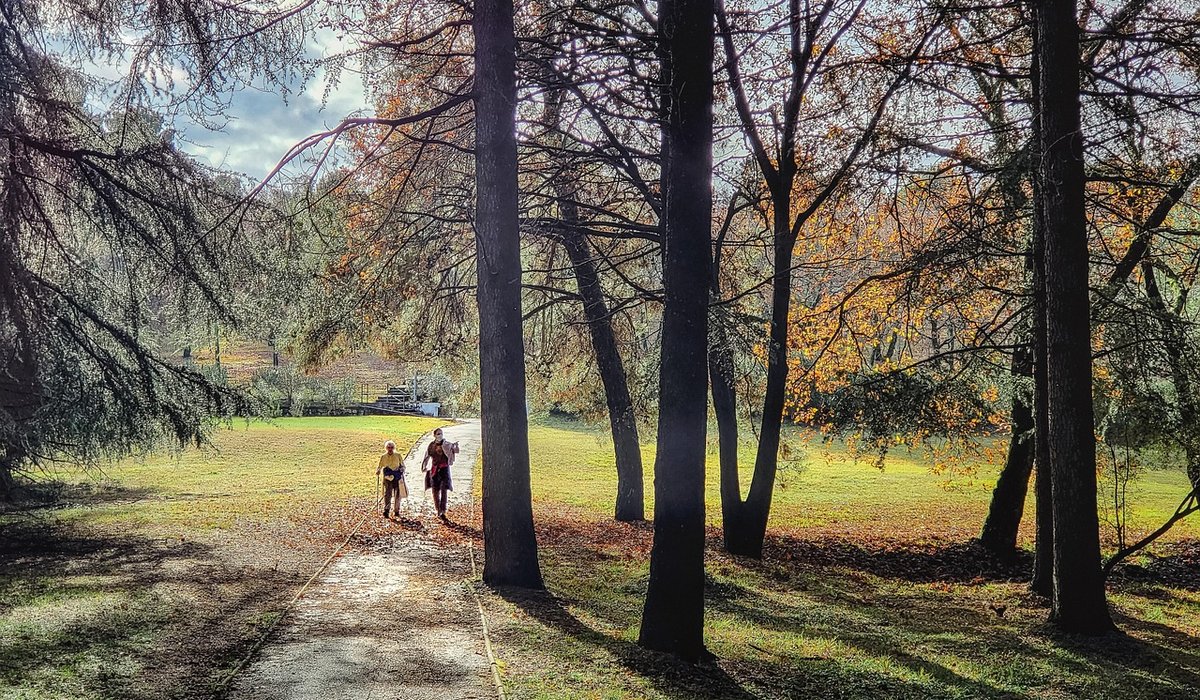
Why Short Walks Reward More Than Long Ones
There is a quiet heresy in walking circles: the best woodland walks are often the shortest. A two-mile circuit through ancient woodland, walked slowly and with attention, will show you more than a ten-mile slog along a bridleway. Veteran trees, mossy stumps, badger setts, the first bluebells pushing through leaf litter — these details do not announce themselves to anyone moving at pace. They reveal themselves to walkers who stop, look up, and look down.
Ancient woodland in the UK is defined, roughly, as land that has been continuously wooded since at least 1600. That is a long time for a place to develop character: holloways worn into the earth, coppice stools wider than your arms can reach, and ground flora that only thrives where the soil has never been ploughed. A gentle route through such a wood is not a lesser walk. It is a different kind of walk altogether.
Planning a Gentle Route Before You Set Off
Choose a wood with marked paths. Many Woodland Trust and National Trust sites, along with county wildlife trusts, waymark their routes clearly, and a well-marked two-to-three-mile trail is ideal. Look for a route described as "easy" or "accessible" if you want firm surfaces; these often follow old carriage tracks or forestry roads with gentle gradients.
- Distance: aim for two to four miles. This allows an hour or two of walking with plenty of pauses.
- Surface: check for mud. Ancient woods hold water, and clay soils can turn a gentle path into a slippery one after rain.
- Timing: early morning is best for birdsong; late afternoon for low light through the canopy.
- Kit: sturdy shoes, a waterproof, water, and binoculars if you have them. A hand lens is a small luxury that transforms bark and lichen.
- Season: late April to mid-May for bluebells; October for fungi and turning leaves; winter for structure and visibility through bare branches.
Tell someone where you are going, carry a paper map or an offline map on your phone, and check the site's own guidance for closures or diversions. Ancient woods are working habitats, and a fallen beech or a nesting season closure is a normal part of their management, not an inconvenience.
Reading the Veteran Trees
Veteran trees are the cathedrals of the wood. They are not simply old; they are trees that have lived long enough to develop features — hollow trunks, dead limbs, fungal brackets, crevices, and sap runs — that support hundreds of species found nowhere else. An oak may need two or three centuries before it becomes genuinely veteran, and a coppiced stool can be far older than it looks.
Walk past a veteran oak and you are walking past an entire ecosystem. Look for:
- Hollows and holes: nesting sites for owls, bats, and stock doves.
- Deadwood: standing dead limbs are not signs of a dying tree but of a living habitat. Resist the urge to tidy.
- Fungi: beefsteak fungus on oak, chicken-of-the-woods on many broadleaves, and the distinctive hoof-shaped brackets of tinder fungus.
- Bark texture: deep fissures on old oak and sweet chestnut hold moisture and invertebrates.
Do not touch or climb veteran trees. Their wood is often soft and brittle, and the mosses and lichens on their bark are slow-growing and easily damaged. Stand back, look up, and let the tree do the talking.
Bluebell Patches and Other Ground Flora
Bluebells are the headline act of an ancient wood in spring, but only in woods where the soil has been undisturbed for centuries. A carpet of native bluebells is a genuine indicator of ancient woodland, and the scent on a still morning is one of the great sensory pleasures of the British countryside.
Walk carefully. Bluebell bulbs sit shallowly in the leaf litter, and a single footfall can crush a plant that took years to establish. Stay on the path, even when the blue is tempting you off it. If you want a photograph, crouch at the edge of the path rather than wading into the middle of a drift.
Look beyond the blue, too. Wood anemone, dogs mercury, wild garlic, and yellow archangel all favour ancient woodland, and each has its own season. Wild garlic, in particular, is unmistakable by smell, and its leaves make a fine addition to a sandwich if you are confident in identification. If you are not, leave it be — some leaves have poisonous lookalikes.
Listening, Looking, and Slowing Down
The real skill of a gentle woodland walk is not navigational. It is attentional. Try walking for five minutes without talking, then stop for five minutes and simply listen. You will hear the wood settle into a rhythm: great tits calling, a woodpecker drumming, the creak of branches, the rustle of a grey squirrel or, if you are lucky, a red one.
Look at the path itself. Ancient woods often contain old boundary banks, ditches, and the remains of coppice stools — evidence of centuries of management. A raised bank running alongside the path may be a medieval woodbank, marking the edge of the wood when it was smaller than it is today. These are the details that reward a slow pace.
Take a moment to sit on a log or a bench if the route has one. Ten minutes of stillness will teach you more about a wood than an hour of walking. Birds and mammals resume their routines once you stop being a moving object, and you become part of the wood rather than a visitor passing through.
Leaving No Trace and Coming Back
Ancient woodland is fragile and fragmented. Around half of what survives in the UK is smaller than five hectares, and much of it is isolated by roads, fields, and development. Every visit is a small act of stewardship, and how you behave matters.
- Stick to marked paths and do not cut corners or create new desire lines.
- Take all litter home, including fruit peel and biodegradable items, which can harm wildlife.
- Keep dogs under control and on leads around livestock and during nesting season.
- Do not pick flowers, fungi, or moss, and do not light fires or use disposable barbecues.
- Report anything unusual — a fallen tree blocking a path, a damaged gate, or signs of fly-tipping — to the site's managing organisation.
The best way to protect a wood is to return to it. Walk the same route through the seasons and you will notice what changes and what does not: the same oak, the same bank, the same patch of bluebells coming back year after year. That familiarity is the whole point of a gentle walking route. It is not about covering ground. It is about getting to know a place.
LEAVE A COMMENT